
Doing A Complete Brake Job
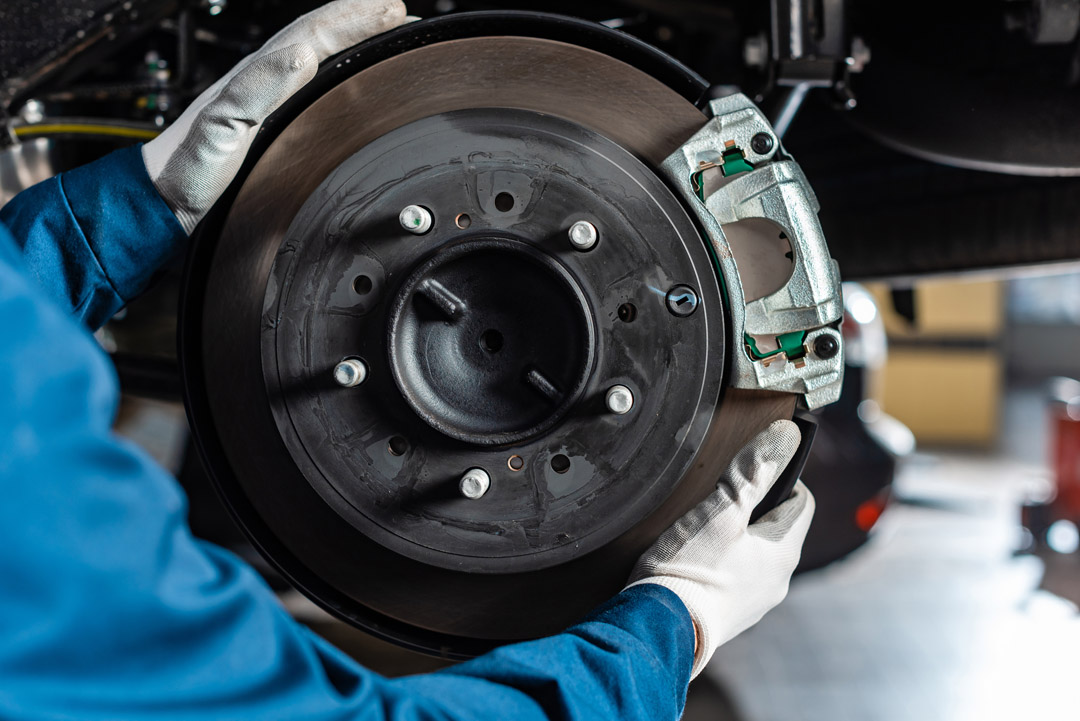
The objective of any brake service should be to restore brake operation back to a safe level of performance. This can mean differing levels, depending on how well you want your brakes to work.
At a minimum any brake job should include:
• Rotors be inspected for excessive grooves, excessive runout and turned or replaced if warranted
• New pads matching the rotors’ requirements installed
• Brake hardware inspected and replaced as necessary
• Brake fluid inspected and system flushed if contamination is noted
• Calipers and master cylinder inspected for leaks and corrected, if needed
• Wheel bearing inspected for excessive play or noise indicating there is a problem and fixed accordingly
• Parking brake inspected and fixed/adjusted if needed
• Lubricating calipers so they slide freely with minimum friction
A premium brake job should include:
• New rotors installed matching the vehicle manufacturer’s specification or an upgrade to a higher-grade rotor type.
• New pads matching the rotors’ requirements installed
• New calipers installed
• New brake hardware installed
• Flushing brake fluid and replacing it with the recommended DOT type fluid.
• Master cylinder inspected for leaks and corrected, if needed
• Wheel bearing inspected for excessive play or noise indicating there is a problem and fixed accordingly
• Parking brake inspected and fixed/adjusted if needed
• Lubricating calipers so they slide freely with minimum friction
• Wheel alignment
How much should brake service cost?
This is a hard question to answer as parts costs, labor rates and number of axles being serviced all need to be considered.
Is performing your own brake service worth it?
Considerable money can be saved by performing your own brake service, provided you have the requisite tools, time and skill sets. Mostly you’ll be saving the labor cost and whatever profit the repair shop would put into their pricing.
• First and foremost is to exercise safe work practices by using jack stands, never the jack, to support the vehicle.
• Second, is to have everything you’ll need before you start. If the vehicle you’re servicing is your only transportation, finding out you need something more halfway thought the job spells trouble.
• Third, be sure you know what needs fixing or you will waste a lot of time and money – or both. While replacing pads and rotors seems simple enough, you still need to know what you’re doing.
Know before you go.
Here are some things to keep in mind:
• Rotors and pads must be compatible with each other.
• If you need to add brake fluid, use the correct DOT brake fluid – what came with the car – don’t mix these fluids.
• Calipers need lubrication so they can move as pads wear. Use the recommended grease.
Complications can arise. Things aren’t always as they seem:
• Unevenly brake pad wear can result from:
• Sticking calipers
• Calipers need cleaning, lubricating or replacement
Excessive brake pedal travel might be from:
• Air in the brake lines
• Worn out pads
A brake pad replacement job could become more complex involving:
• A rotor with excessive runout
• Sticking calipers
• Leaking calipers
This is why it’s so important to properly diagnose your brake problem(s) before you buy the parts you think you’ll need or start working on your vehicle. There may be more that’s required for a complete job that will restore brake performance and ensure a vehicle that can be stopped safely.
If you want to save some money by doing your own brake job, be sure you know exactly what’s wrong and have the skills and tools for the job. And don’t be afraid to take your vehicle to a qualified mechanic if you find yourself in over your head. Making a mistake with your brakes can be a deadly – they are what stop your vehicle.