
Measuring Rotor Run Out
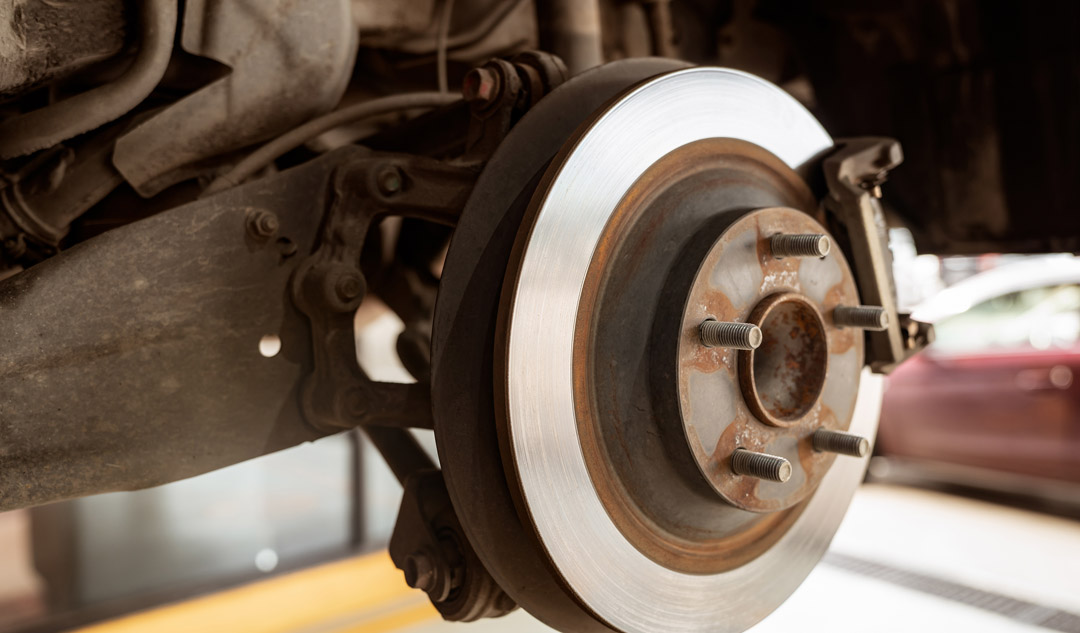
Looks can be deceiving, with beauty being only skin deep and performance going to the core of quality materials, designs, and manufacturing processes.
For the customer seeking the lowest price, retailers will often have a house brand “price leader” or economy line of rotors. They’re often made with substandard materials that don’t conform with the vehicle manufacturer’s specifications and designs that save the amount of material used, casting time and complexity, and machining operations.
As important as the materials used, the cooling/solidification rate also plays a big part in rotor performance. Cast iron should cool slowly for a good crystalline structure and to minimize internal stresses. Often economy brake rotors are forced cooled to speed manufacturing and lose desired metallurgical properties in the process.
Other differences between economy rotors and higher quality rotors may include:
• Less weight because less material is used.
• Fewer cooling vanes or different vane geometry, resulting in slower cooling and higher operating temperatures.
• Thinner rotor walls resulting in less heat absorption and higher operating temperatures.
• A compromised design for achieving greater vehicle application per part number that reduces overall fit and performance.
• No anti-corrosion coatings to minimize rust.
Unfortunately, appearance alone is no way to judge a rotor’s quality. A “price leader” rotor may appear very similar to a premium-quality rotor. However, the inexpensive “economy” rotor will not last or perform as well as rotors that equal or exceed OEM specifications, and will probably cost more over the vehicle’s life.